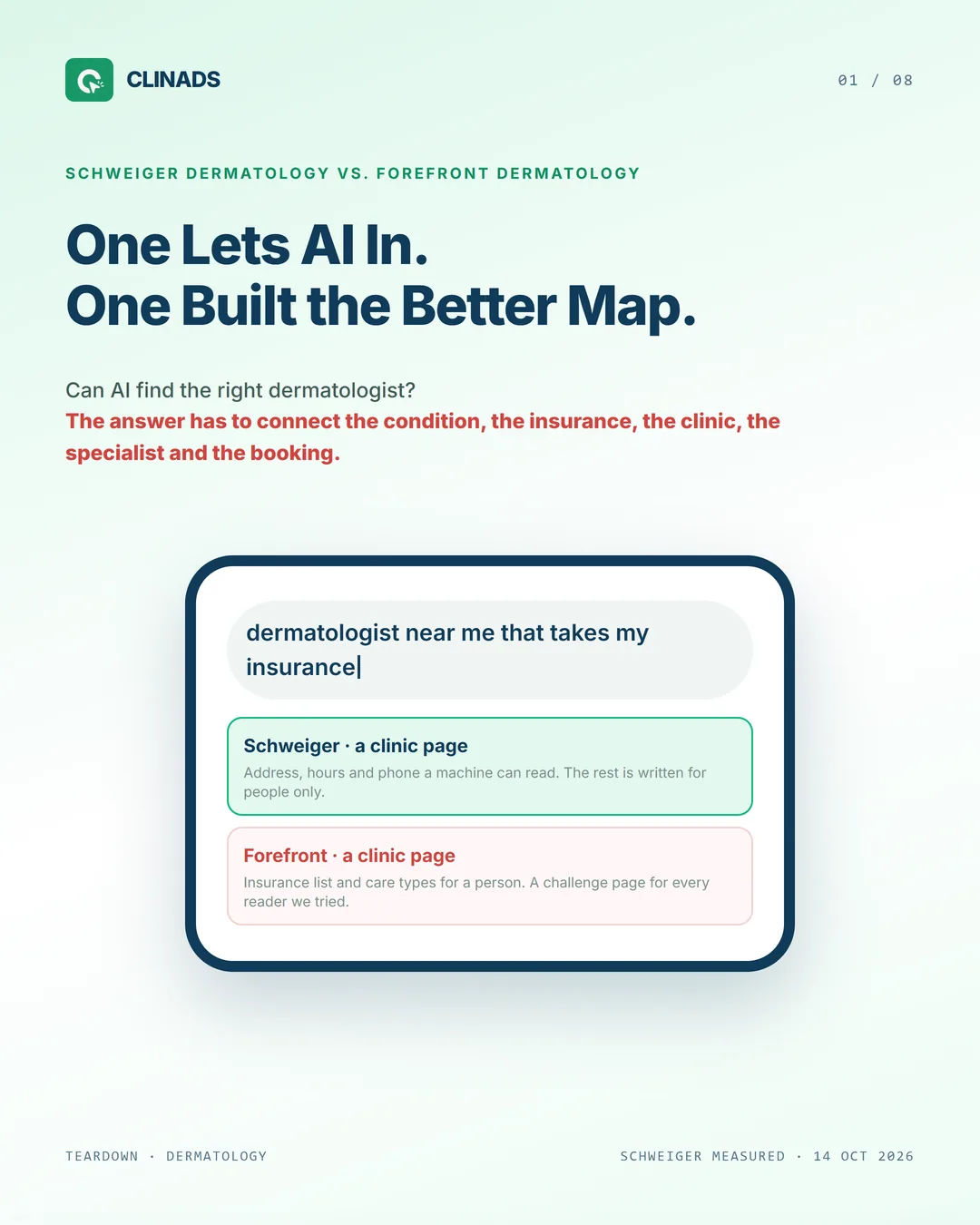
A patient types dermatologist near me that takes my insurance. Two big, multi-state dermatology groups want that visit: Schweiger Dermatology, with 158 location pages, and Forefront Dermatology, with more than 280 locations by its own count.
To recommend one, an AI assistant has to connect five things: the condition, the insurance, the clinic, the right specialist and a way to book. The easier a website makes those connections for a machine, the easier it is to recommend.
What Schweiger does right: every clinic page opens
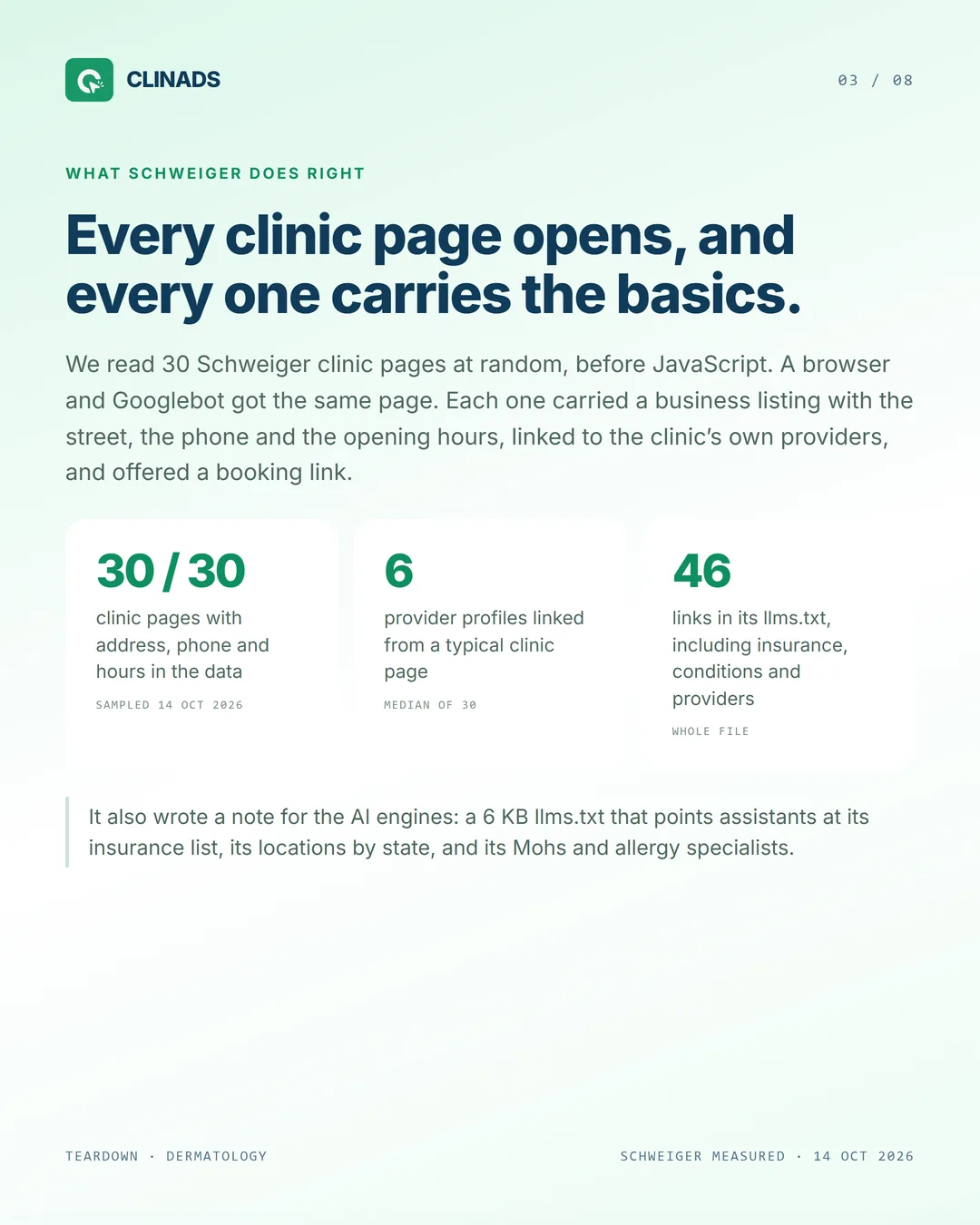
We read 30 Schweiger clinic pages at random on 14 October 2026, before JavaScript runs. A browser and Googlebot got the same page. Every one carried a business listing with the street, phone and opening hours, linked to that clinic’s own providers, and offered a booking link.
Schweiger also wrote a note for the AI engines: a 6 KB llms.txt with 46 links, pointing assistants at its insurance list, its locations by state, and its Mohs and allergy specialists.
Where Schweiger stops: the connections live in the words
A reader sees the providers, the treatments and, on about half the pages, the insurers. The listing a machine reads carries the address and the hours, and stops there.
A Schweiger clinic page · everything in the listing
"@type": "LocalBusiness", "telephone", "address",
"openingHoursSpecification": [ … ]

No map pin. No rating. No treatment. No provider. No booking action.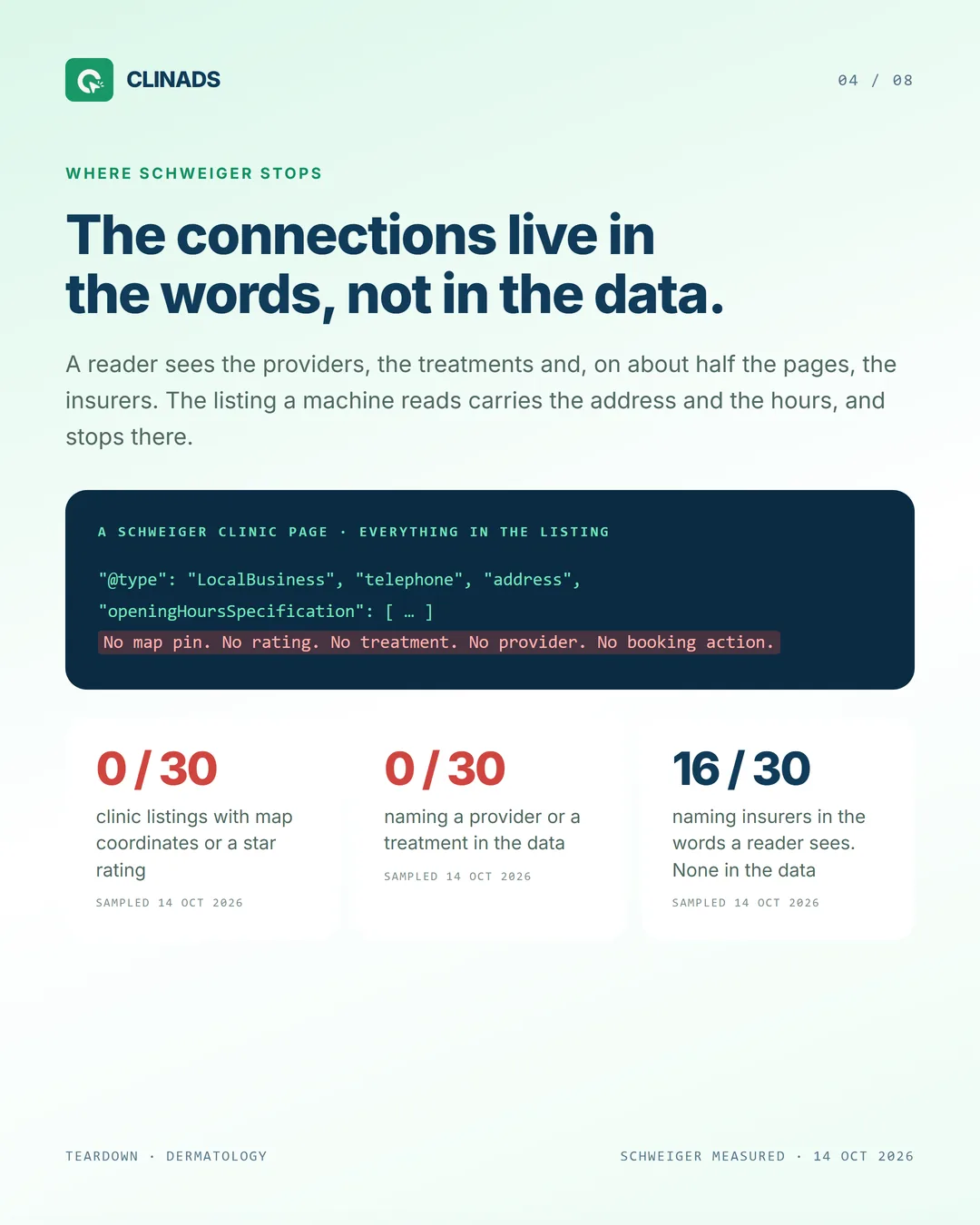
One thing to fix this week: two sets of opening hours
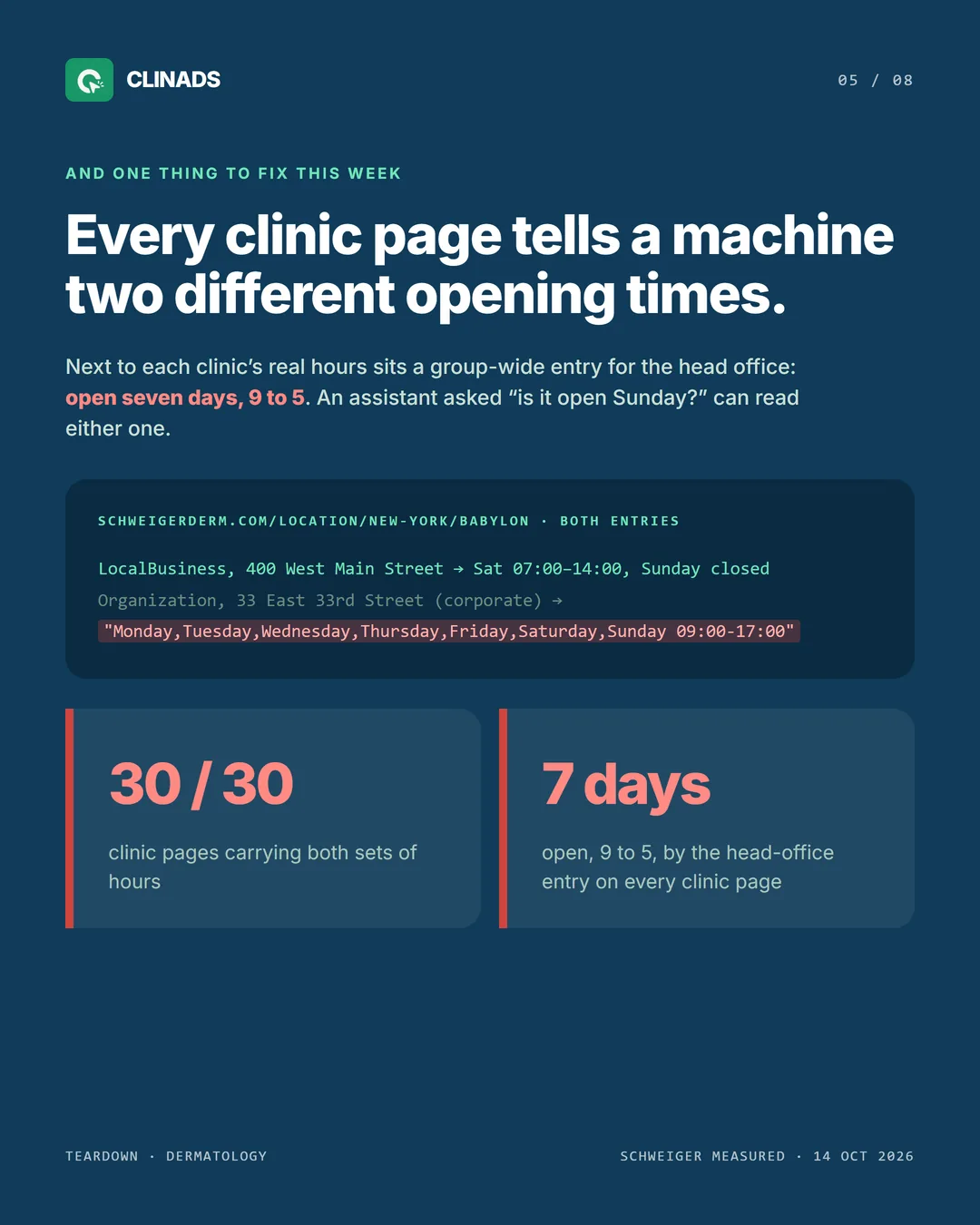
Next to each clinic’s real hours, every Schweiger clinic page also carries a group-wide entry for the head office in New York that says it is open seven days a week, 9 to 5. An assistant asked “is it open on Sunday?” can read either one.
schweigerderm.com/location/new-york/babylon · both entries
LocalBusiness, 400 West Main Street → Sat 07:00–14:00, Sunday closed
Organization, 33 East 33rd Street (corporate) →
"Monday,Tuesday,Wednesday,Thursday,Friday,Saturday,Sunday 09:00-17:00"
All 30 clinic pages we sampled carried both.
Forefront: we could not open it with any automated reader
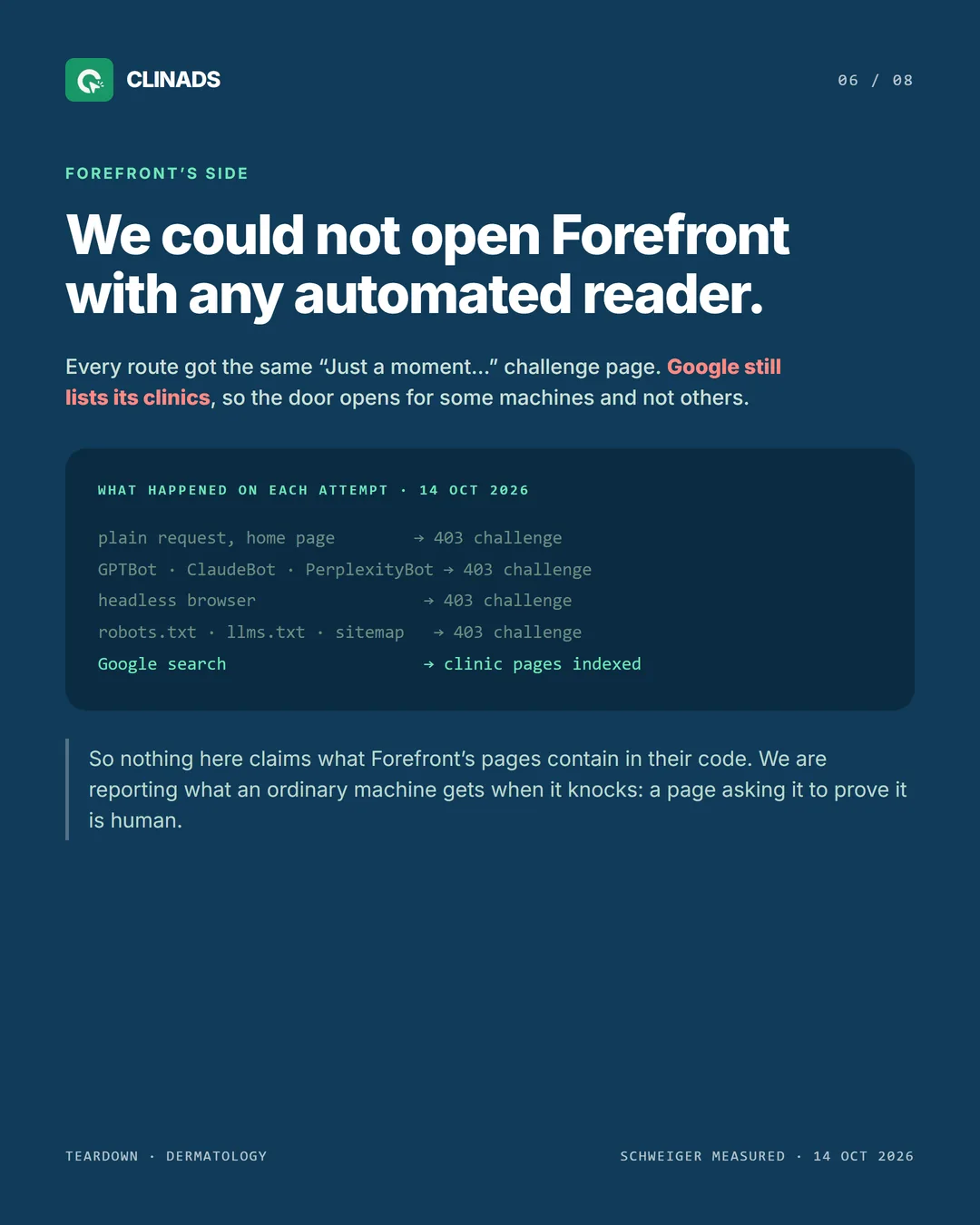
Every route we tried on 14 October 2026 got the same “Just a moment…” challenge page, while Google still lists its clinic pages. The door opens for some machines and not others.
What happened on each attempt · 14 Oct 2026
plain request, home page          → 403 challenge
GPTBot · ClaudeBot · PerplexityBot → 403 challenge
headless browser                   → 403 challenge
robots.txt · llms.txt · sitemap    → 403 challenge
Google search                      → clinic pages indexed
So we make no claims about what Forefront’s pages contain in their code. We are reporting what an ordinary machine gets when it knocks: a page asking it to prove it is human.
What a person sees: the better map
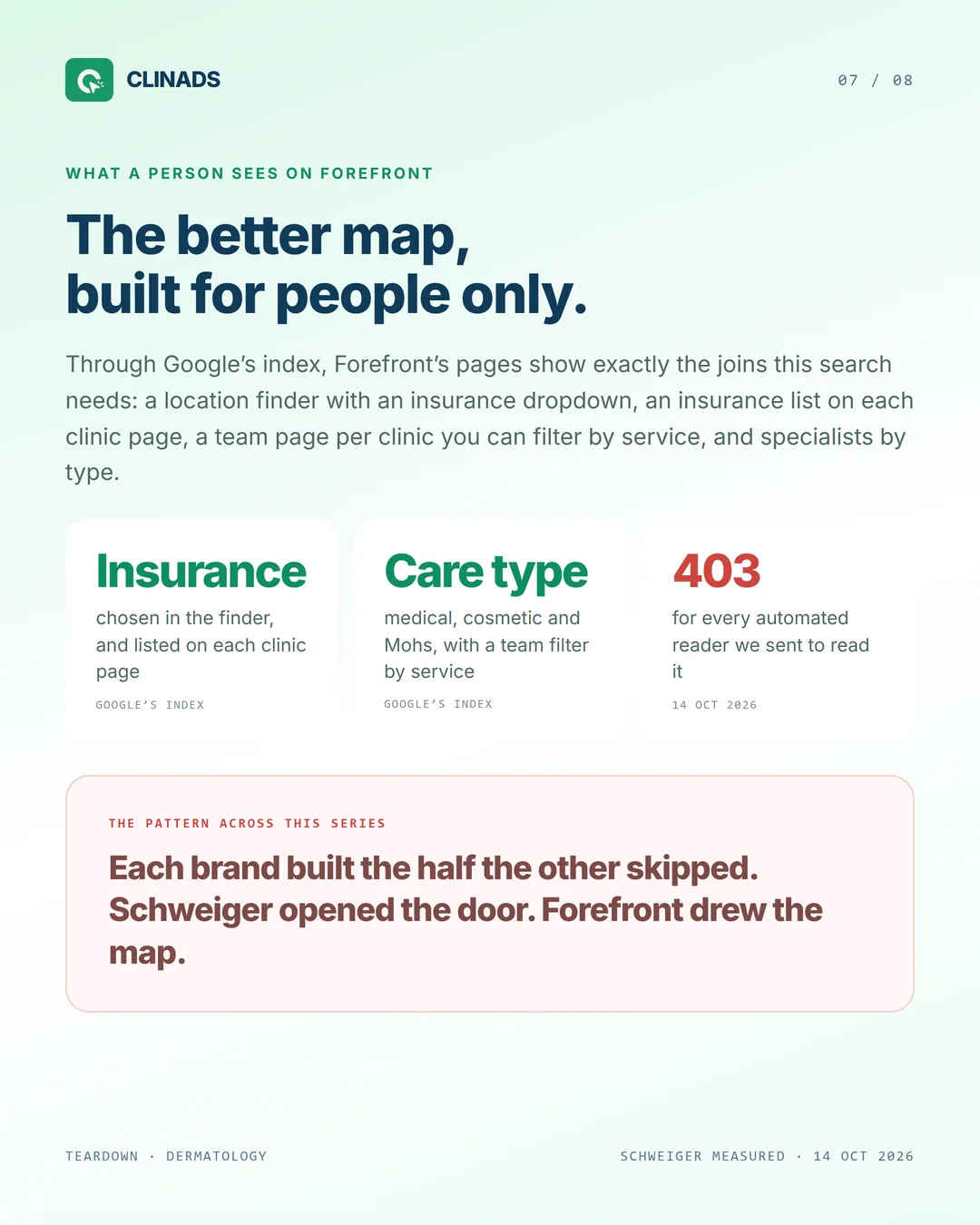
Through Google’s index, Forefront’s pages show exactly the connections this search needs: a location finder with an insurance dropdown, an insurance list on each clinic page, a team page per clinic you can filter by service, and specialists by type, from Mohs surgeons to cosmetic experts.
The pattern across this series: each brand built the half the other skipped. Schweiger opened the door. Forefront drew the map.
Why this matters to a clinic
The easier your site makes the connections, the easier AI recommends you.
- Name the conditions you treat and the insurers you take, in the page data and not only in the words.
- Attach your providers to each clinic, so an assistant can match the right specialist to the right location.
- Give each clinic one set of opening hours.
- Make sure the AI assistants can get through the door.
- We search for your clinic the way a patient would. Your city and your competitors, on Google and on the AI assistants.
- You get the gaps in plain sentences. One list you can hand to whoever runs your website.
- It takes a day. No commitment, no cost.
Download the slides (PDF, 1.2 MB)
Want a free AI visibility audit for your practice?
Free, and it takes about a day. We check your city and your competitors the way a patient does, then send back every gap in plain sentences.
Get my free audit