Summary: The best immediate care centers in New York City include CityMD for its extensive network and accessibility, AFC Urgent Care for its clear service listings, NYU Langone Urgent Care for a specific Manhattan location, and NewYork-Presbyterian Virtual Urgent Care for remote access. Each offers unique advantages, but patients should verify billing details and service availability before booking to avoid unexpected costs.
A sudden fever or a sprained ankle sends most people to the nearest door. Weeks later, the bill can include a surprise facility fee. That habit falls apart fast for anyone still working through an annual deductible, paying cash, or comparing clinics whose first quotes vary a lot. Finding the right option among the best immediate care centers in New York means looking past storefront convenience and checking what you may be billed before you even step into an exam room.
Across New York, immediate care pricing does not follow one standard. A walk-in chain on the street, a hospital-linked outpatient site, and a virtual telehealth visit can all review the same symptoms while producing very different line items. The best clinic is not always the one with the biggest subway ad or the one closest to your front desk. In practice, that matters.
For self-pay patients and households with high-deductible plans, the most reliable center gives clear pricing, a clear scope of practice, and upfront intake details before registration starts. Comparing clinical reach, listed services, and facility type gives you the facts you need before any financial obligation begins.
1. CityMD: best for broad walk-in access
People who care most about geography often look to CityMD in New York because the network runs dozens of physical sites across the metro area. The company says it is the largest urgent care provider across New York and New Jersey, with many neighborhood locations where patients can walk in without an appointment. That advantage is about footprint, not a single specialty at one clinic.
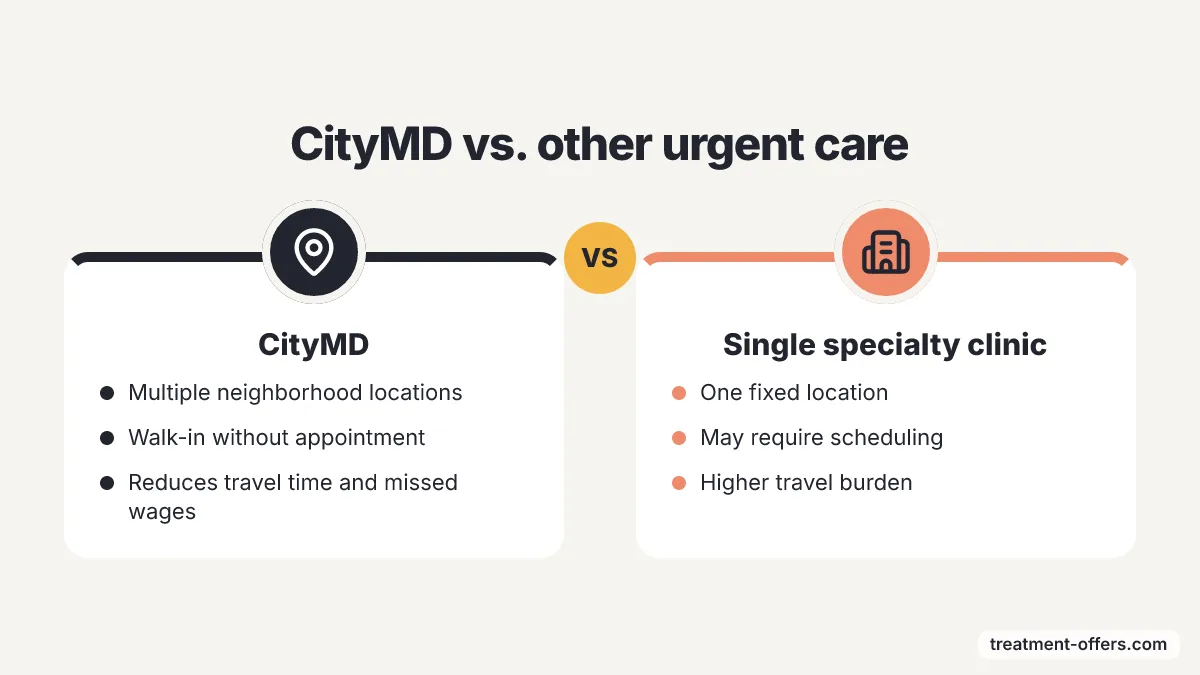
Being close changes the real cost of getting care right away. A site three blocks from home or work cuts travel time, reduces missed wages, and can keep a minor problem from turning into an expensive emergency room visit. With multiple neighborhood clinics across borough lines, patients can fit an unscheduled evaluation into a workday without losing the whole afternoon.
Self-paying patients still need to call the specific site before they go in. Front desks handle billing differently, so ask for the exact cash visit rate, ask whether routine lab work has separate diagnostic fees, and confirm how your insurance affects the amount collected at check-in. The published materials show where the network is, not what every visit will cost, so direct confirmation is necessary before intake.
2. AFC Urgent Care New York City: best for published routine services
Patients who need standard screenings do well to contact AFC Urgent Care New York City when their need fits a common category before they arrive. The provider says its walk-in clinics across the city handle physicals, lab tests, COVID testing and related routine evaluations, which gives prospective patients a fixed list of primary services instead of a vague urgent care promise.
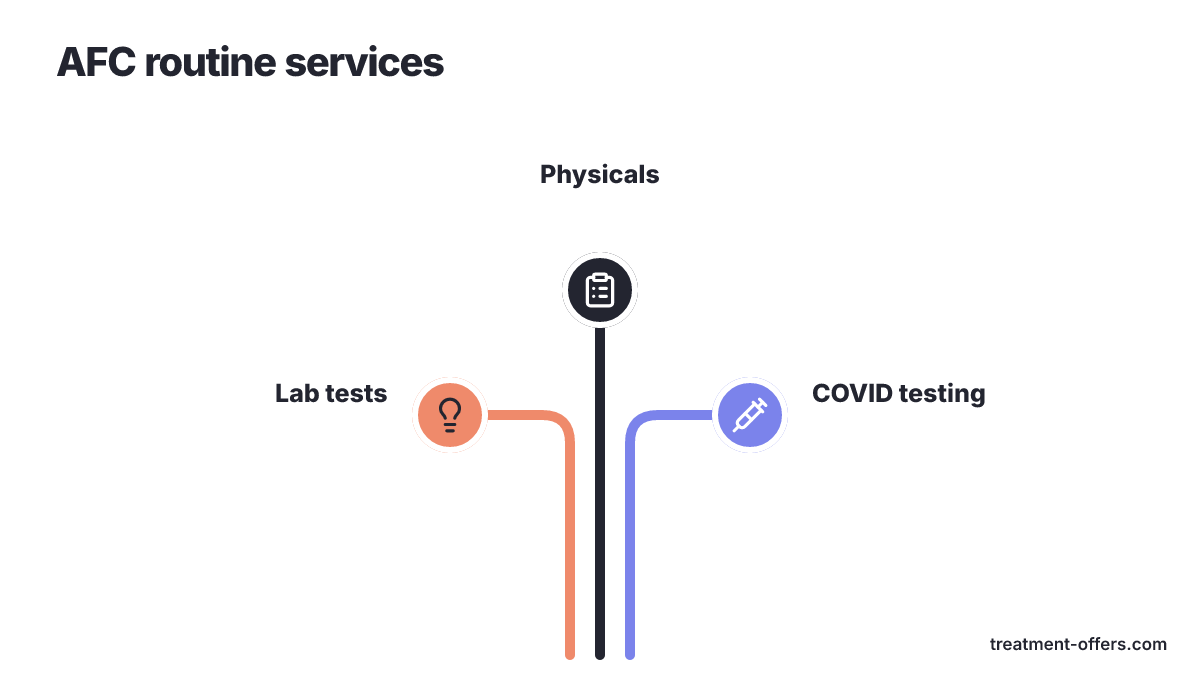
Concrete categories on the website make the first call easier. Published offerings help patients confirm capability before they spend time on transit. If you already know you need a work physical or an urgent diagnostic panel, checking that the clinic handles those procedures keeps you from sitting through a pointless intake interview. Diagnostic tests and routine physical exams often trigger separate billing codes, so the base consultation fee and the specimen processing charge rarely show up as one bundled item.
You still need a full price check with the desk before registration. Ask whether the required test gets processed inside the clinic or sent to an outside pathology lab that bills on its own. Patients should also ask whether the standard visit charge goes up if the clinician finds minor complications that lead to extra diagnostic work.
3. NYU Langone Urgent Care: best for a named Manhattan site
People who want an academic hospital setting, not a retail storefront, can go to NYU Langone Urgent Care for coordinated care. The system gives the exact location for its Care on Demand service at Ambulatory Care West Side at 355 West 52nd Street, 8th Floor, New York, NY, 10019. That means one fixed place to reach, instead of sorting through regional call centers and chasing open exam rooms across town.
If you already get care inside the NYU Langone network, the hospital-backed setup has another advantage. Your lab results, prescription history, and specialist notes stay in one chart. You do not have to recite your whole medical history from memory while sitting on an exam table with a fever. Call the desk at the listed site, and you reach staff in that suite, not an operator miles away reading policy from a shared prompt screen.
Hospital backing changes the bill, so ask how the visit gets coded. If staff bills it as hospital outpatient department care instead of a standard walk-in clinic charge, facility fees can push your out-of-pocket cost higher. Ask the front desk what cash amount is due at check-in if you have not met your insurance deductible for the year.
4. NewYork-Presbyterian Virtual Urgent Care: best for seven-day remote access
For minor problems that still need quick answers, skipping transit and crowded waiting rooms helps a lot, and NewYork-Presbyterian Virtual Urgent Care fits that need. The network says its remote visits run available seven days a week. That schedule works for people stuck at home and for anyone who cannot spare three hours to cross the city after work.
A short video visit lets a clinician check your symptoms and tell you whether antibiotics, home care, or urgent testing at an emergency room makes sense. Parents dealing with a sick child after hours get a fast first look, and so do workers on tight schedules who want clear advice before they spend money on a cab. A doctor on your couch can keep a minor issue from turning into an expensive emergency room trip when basic treatment would handle it.
Check the billing rules before you log in. Find out the self-pay price up front, and ask whether an in-person follow-up creates a second bill. You should also ask whether outside pharmacy orders, lab orders, or referrals from that online call add separate hospital facility fees to your statement.
How to choose when price and insurance are unclear
Patients who carry a large out-of-pocket burden should pick a care provider for administrative clarity, not for marketing copy. None of the four featured healthcare organizations posts one upfront self-pay amount that covers every case, so the only useful test is how fast and how clearly staff can state what you owe before treatment starts.
| Option | Published access clue | Best fit for a price check |
|---|---|---|
| CityMD | CityMD says it is the largest urgent care provider in New York and New Jersey, with numerous locations. | Compare several nearby walk-in choices before you call one front desk. |
| AFC Urgent Care New York City | AFC lists physicals, lab tests, COVID testing and more at its New York City walk-in centers. | Check whether a routine service has a name before you ask for the visit and test price. |
| NYU Langone Urgent Care | NYU Langone lists an urgent care site at 355 West 52nd Street, 8th Floor, New York, NY, 10019. | Ask billing questions about one named Manhattan location. |
| NewYork-Presbyterian Virtual Urgent Care | NewYork-Presbyterian says virtual urgent care appointments are available seven days a week. | Start with a remote visit when travel time or mobility changes the real cost. |
Your first call with the front desk has to cover the self-pay cash rate, the contracted insurance fee schedule, and the exact balance due before discharge. If the person on the phone will not state the routine consultation charge, the facility may still sit inside your insurance network, yet you still cannot know your actual out-of-pocket liability until the bill arrives in the mail.
A careful phone question gets better information than a vague one. You can tell intake staff: I have a high deductible and need the estimated patient responsibility before I book. What is the visit charge, what services are billed separately, and can I get the estimate in writing or in the patient portal?
Then call your insurer and compare the answers. Confirm whether the exact facility address or digital telemedicine program is in network, verify whether billing uses professional office codes or hospital outpatient codes, and ask whether your deductible must be exhausted before regular copayments start.
Protections against surprise balance billing give patients a legal path to contest out-of-network claims, though prevention still works better. The New York Department of Financial Services announced in August 2026 that revised guidelines and proposed regulations would strengthen the IDR process for surprise medical bills, with formal implementation scheduled for August 26, 2026.
State dispute channels should stay in reserve as an emergency backstop. An independent dispute procedure deals with billing fights after charges show up, while a verified written estimate protects your bank account before services happen.
People in federal health programs face specific statutory cost structures, so billing classification matters. In a November 2025 regulatory notice, the Centers for Medicare & Medicaid Services designated the 2026 Part B deductible at $283.00 for all Part B beneficiaries, while noting that the 2026 standard monthly premium rose 9.7 percent or $17.90 higher than the 2025 baseline figure of $185.00.
People outside the metropolitan downstate region, such as someone in Cheektowaga, cannot use this roster as a local directory. These featured health systems cover New York City boroughs, specific Manhattan addresses, broader downstate regional reach, or state-licensed telehealth visits, so a Cheektowaga resident needs to call regional clinics near Buffalo before scheduling.
Our directory lists 39 Immediate Care clinics across 13 cities as of November 2026, which shows that patient charges vary enough to justify careful price checks before you book. A companion analysis from Treatment Offers detailing New York urgent care price checks outlines more verification techniques for metropolitan healthcare consumers. Treatment Offers is a Clinsight product that curates new-patient specials, discounts, and seasonal promotions from U.S. Clinics. That matters here because a discount only helps after a consumer has figured out the base exam fee, laboratory add-ons, and co-insurance rules.
Securing a documented quote still makes sense before you set an appointment with MVP Dental. Confirm total financial responsibility at reception before you finalize your chair time. Promotional marketing or clinic prestige should never stand in for the exact number you will be asked to pay.
Conclusion: how to pick an immediate care center in New York City
Select the care setting that directly fits your clinical requirements, whether that means a nearby retail walk-in office, an established academic Manhattan facility, a clinic publishing specific diagnostic tests, or a seven-day digital visit. Place an intake call to the front desk and a second call to your benefits insurer before securing your appointment time. Record the exact baseline exam fee, anticipated laboratory line items, institutional facility codes, and check-in payment amounts in your personal notes.
Conducting these verification calls demands extra preparation compared to simply walking into the closest storefront, but gathering documented quotes shields you from unexpected clinical balance bills. This operational guidance addresses administrative preparation and intake pricing; only a licensed medical clinician can determine the level of clinical intervention required to treat your physical symptoms safely.
When to skip urgent care and go to the emergency room
Immediate care centers handle minor illnesses and injuries, not emergencies. Call 911 or go straight to a hospital emergency department for chest pain, trouble breathing, signs of a stroke, severe bleeding, or a serious head injury, whatever the billing questions. If you are unsure how urgent your symptoms are, a licensed clinician should make that call.
Frequently Asked Questions
What makes CityMD a top choice for immediate care in New York City?
CityMD is a top choice due to its extensive network of locations across New York and New Jersey, allowing patients to access care conveniently without an appointment. This accessibility reduces travel time and potential costs associated with emergency room visits, making it ideal for those who prioritize geographic convenience.
Why is AFC Urgent Care recommended for routine services?
AFC Urgent Care is recommended for routine services because it clearly lists its offerings such as physicals, lab tests, and COVID testing. This transparency helps patients confirm the clinic's capabilities before visiting, ensuring they receive the necessary services without unnecessary intake processes.
What advantage does NYU Langone Urgent Care offer for Manhattan residents?
NYU Langone Urgent Care offers the advantage of a specific location at Ambulatory Care West Side in Manhattan, providing coordinated care within the NYU Langone network. This setup ensures that patients' medical records are centralized, avoiding the need to recount medical histories during visits.
How does NewYork-Presbyterian Virtual Urgent Care benefit patients?
NewYork-Presbyterian Virtual Urgent Care benefits patients by providing seven-day remote access to medical consultations, eliminating the need for travel and reducing exposure to crowded waiting rooms. This service is ideal for minor issues that require quick attention and for those with limited time or mobility.
What should patients consider when choosing an immediate care center based on cost and insurance?
Patients should prioritize administrative clarity over marketing when choosing an immediate care center. It's crucial to ask detailed questions about self-pay rates, insurance fees, and billing practices before treatment begins to avoid unexpected costs. Confirming these details with both the care provider and insurer ensures a clear understanding of potential financial obligations.
Related reading
- 4 Best New York Urgent Care Clinics for Price Checks
- 6 Best SMILE LASIK Clinics Near City of Industry