
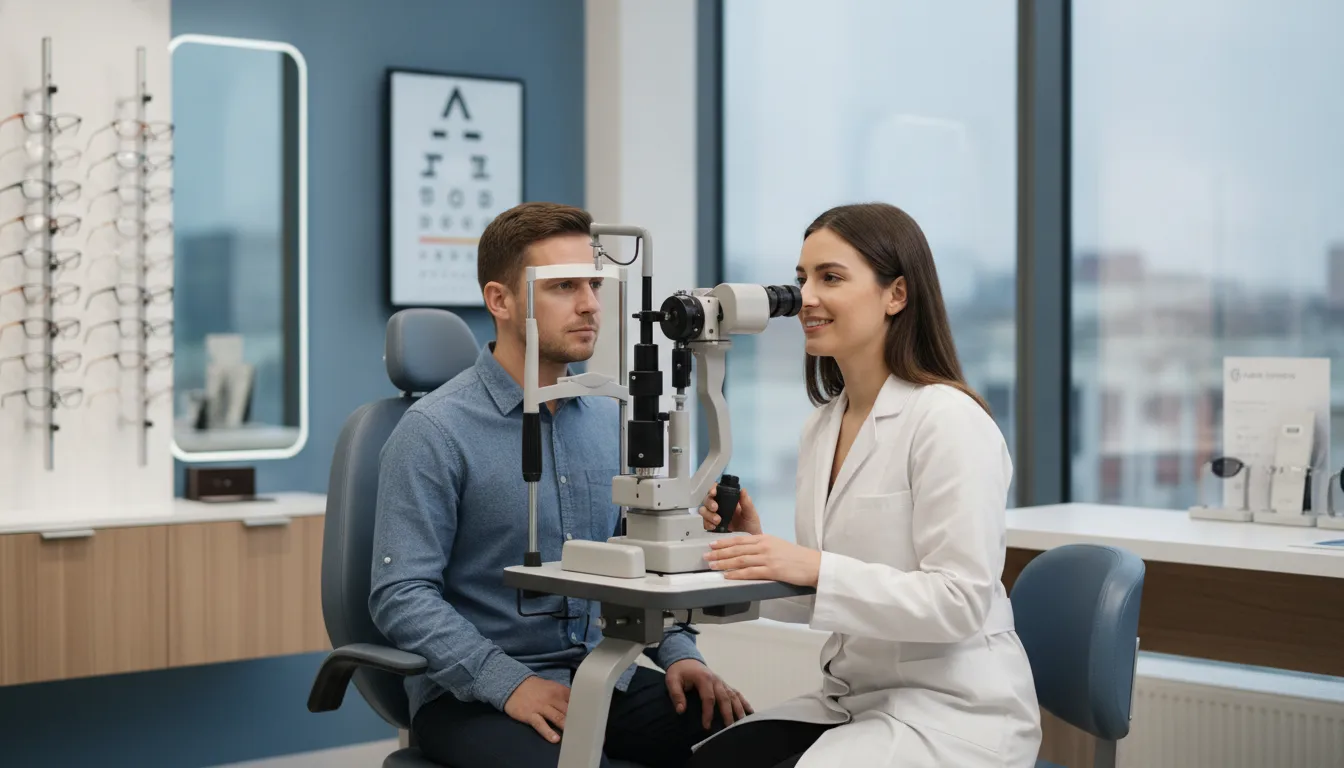
Summary: Eye exam costs without insurance typically range from $50 to $250, depending on the clinic and location. Many clinics offer free exams with eyewear purchases, and promotions can help reduce expenses. Regular exams are recommended every 1-2 years, and comparing prices and offers is crucial for finding affordable options.
A patient in the optical waiting room may be staring at an itemized clipboard, only to learn that a routine vision check will land entirely on their own bill. For people with a $3,000 deductible on a medical plan, basic visual acuity checks frequently fall outside coverage limits. That leaves an unexpected cash bill of $50 to $250.
Knowing the eye exam cost without insurance helps families plan ahead instead of putting off needed eye care. An unbundled vision evaluation usually runs from $50 for a simple refraction check to $250 for a fuller medical eye health visit. Add contact lens fittings or advanced digital retinal scans, and the bill can move past $300 before frames or prescription lenses even show up in the estimate.
That is where planning changes the picture. If you know the usual pricing tiers, watch for retail deals that waive exam fees with a frame purchase, and compare nearby practices before booking, you can protect the household budget without ignoring your eyesight.
Key Takeaways
- Baseline costs span broad ranges: Routine eye exams without vision insurance usually cost between $50 and $250. Location, clinic overhead, and doctor credentials create wide price gaps from one practice to the next.
- Retail packages offer zero-dollar exams: Many commercial eyewear chains will include a free comprehensive eye exam when patients buy a complete set of prescription glasses or a year’s supply of contact lenses.
- Contact evaluations require dedicated fees: Specialized contact lens fittings add $100 to $200 on top of the standard exam. Doctors need corneal curvature mapping and tear film checks for that work.
- Clinical guidelines recommend regular visits: The American Optometric Association advises healthy adults to get a professional vision assessment every one to two years. Patients with chronic illness need yearly monitoring.
- Major medical policies exclude refractive care: Standard private health plans usually decline routine refractive vision checks. That leaves cash-paying patients depending on clinic promotions, package specials, or separate vision riders.
At a Glance
| Service Option | Typical Out-of-Pocket Cost | Free Offer Availability | Recommended Frequency |
|---|---|---|---|
| Routine Vision Exam Only | $50 to $250 | Available at select clinics with eyewear purchase | Every 1 to 2 years |
| Comprehensive Exam with Eyewear | $150 to $500+ | Frequently bundled into package deals | Every 1 to 2 years |
| Contact Lens Fitting and Exam | $100 to $200 | Rarely offered without an added fee | Annually |
1. Clinic Directory: Best for Finding Promotions
A dedicated healthcare directory helps cash-paying patients find local optometry clinics that run introductory prices, package discounts, and seasonal exams. A centralized platform cuts out phone calls and shows cash discounts, flexible payment plans, and verified patient ratings for several neighborhood locations in one place.
Using a searchable database gives patients without vision insurance a way to compare options by clear cash rates. Of the 93,087 clinics listed in our directory across 1,711 cities, patients can compare pricing structures, service specialties, and local promotional packages with little effort. Of the 68,362 listings that carry a rating in our directory, 48% are rated 4.5 or higher, which helps consumers weigh price against reputation.
Directory listings that stay plain and specific make it easier to sort practices by municipal boundaries, particular procedures, and posted fee caps. Uninsured people can quickly see which offices accept self-pay clients, publish standard cash schedules, or offer interest-free monthly financing for higher-priced corrective eyewear.
Patients who have been avoiding eye care because of possible bill shock can check clinic profiles before they go. Confirming base diagnostic fees, available walk-in times, and practitioner background before stepping into the exam room gives patients more control over what they spend on vision care.
2. Free Eye Exam Offers Near Me
Free eye exam offers are really promotional bundles. Retail optical chains and community clinics waive the exam fee when you buy prescription eyewear outright, or when you meet public aid requirements. The savings can be real, but they only matter if you check the purchase rules and the covered services first.
Retail vision centers and optical storefronts push these deals all the time to bring in new prescription customers. In these bundled offers, the exam cost, which usually sits between $50 and $250, gets credited back or disappears once you choose qualifying frames and corrective lenses.
Read the terms before you sit down in the exam chair. Some shops want a minimum frame spend. Others honor the offer only during slow appointment slots or on certain days of the week. Ask one plain question too, does the waived fee include a full medical eye health evaluation, or just a vision test for basic glasses?
Community clinics and public charitable foundations give people another path when money is tight. Regional public health centers and non-profit groups hold free screening events and seasonal wellness fairs. These visits can include basic visual acuity checks, eye disease screening, and low-cost corrective options for vulnerable community members without commercial insurance. For example, Plattsburgh Family Health offers quality primary care services, including vision screenings, to underserved populations (HHHN, 2023).
3. How Often Do You Need an Eye Exam?
Healthy adults aged 18 to 64 should get an eye exam every one to two years. That schedule helps track vision acuity and catch eye diseases that can sit there without symptoms. Children, contact lens wearers, seniors, and people living with conditions like diabetes need yearly exams if they want to lower the risk of lasting vision loss.
The American Optometric Association gives clear guidance on exam timing. Age matters. Overall health matters too, along with the kind of work a person does. Children need structured vision checks during early development, since untreated refractive errors can slow school progress and lead to amblyopia. For adults between 18 and 64 with stable vision and no chronic health problems, visits every two years are usually enough to update a prescription.
People with higher health risks need to stay on an annual schedule. Hypertension, high cholesterol, and diabetes can change the tiny blood vessels in the retina long before anyone feels off. Fundoscopic imaging and dilated pupil exams can pick up diabetic retinopathy and glaucoma while treatment still has a chance to matter.
Contact lens wearers also need annual checks, even when their vision seems steady. Lenses sit right on the cornea, so there’s some risk of hypoxia, tiny scratches, bacterial infection, and poor lens fit. A yearly exam makes sure the lenses still fit and that the eye surface isn’t irritated.
4. Evaluating Eye Exam Costs Without Insurance
The eye exam cost without insurance usually runs from $50 to $250 for a standard refractive vision check. Geography, practitioner specialty, and the equipment in the room all shape the price. Extra testing, including contact lens fittings, digital retinal imaging, or pupil dilation, can push the cash total above $300.
If you pay out of pocket, it helps to understand how optometry offices build their fees. A basic refractive exam finds the prescription needed for corrective lenses. A full medical exam goes further and looks at internal eye structures, eye pressure, peripheral vision, and corneal health. That kind of visit costs more, partly because of regional rent and partly because some practitioners bill at a higher rate.
Call ahead and ask for a line-by-line price estimate before you book. Find out whether digital retinal photography is part of the base price or sold as an optional $30 to $50 upgrade instead of manual pupil dilation. It also helps to know whether the office uses an optometrist or an ophthalmologist, since medical doctors often charge specialty rates. For example, Optum Ear, Nose and Throat (Otolaryngology) - Glen Cove, NY provides specialized care that may come with higher fees (Optum, 2023).
There are still ways to make the bill easier to handle. Federally Qualified Health Centers often use sliding-scale fees tied to household income, which lowers exam prices for qualifying patients. Online price-comparison tools and clinic search engines let self-pay consumers compare local cash rates, so it’s easier to find vision care at a predictable price.
5. Leveraging Promotions for Eye Exams and Eyewear
Eye care gets expensive quickly, and promotions can soften the blow. Seasonal discounts, frame bundles, and cash-pay specials can all shave money off the final bill. If you compare local offers on platforms like the Clinic Directory, you may turn up lower exam fees, two-for-one frame packages, and first-visit pricing for people without insurance.
Independent practices and large optical chains both want self-pay patients. That rivalry leads to package deals that trim the exam cost and the price of the glasses or contacts. It also pays to join email lists from major retailers, since they sometimes send private sales, manufacturer rebates on frames, and exam-plus-lens bundles that sit well under regular sticker prices.
Social media can point you to short-term bargains as well. Local clinics and optical shops post flash sales, holiday markdowns, and back-to-school offers. Some vision stores run loyalty programs, too, with cheaper backup pairs, free nose-pad replacements, or lower prices on yearly contact lens supplies.
Run the numbers before you hand over your card. A steep percentage off can hide extra charges for designer frames, high-index lenses, or anti-reflective coatings. Ask for the full price in writing, exam included, so you can see whether the promotion truly saves money.
6. Understanding Insurance Coverage for Eye Exams
Routine eye exams and prescription eyewear rarely fall under standard health insurance. They usually sit in a separate vision plan, and without that rider, the patient pays out of pocket for the visual acuity check, the refraction test, and the glasses.
This is where people get tripped up. Major medical insurance steps in for eye problems tied to disease, sudden injury, or diagnosed medical trouble, such as sudden vision loss, dry eye syndrome, eye infections, or diabetic eye exams. A regular visit to update an eyeglass prescription belongs in a different bucket.
Check your benefits booklet closely. Look for a pediatric vision benefit or an adult vision rider. If your employer doesn't offer vision coverage, pre-tax accounts can help. An HSA or FSA lets you pay for routine exams, contact lenses, prescription glasses, and diagnostic imaging with pre-tax dollars.
No vision insurance? No HSA or FSA? Ask about a prompt-pay or cash-pay discount. Some clinics offer a cash discount if you pay at the time of your visit. That cuts their billing work and lowers your bill at the same time.
Conclusion
Getting proper eye care without vision insurance takes planning. It means picking up the phone, asking three local clinics for their cash exam fee, and comparing those numbers with package offers at retail optical centers. If you need frames or lenses, look for bundles that apply the exam fee to the eyewear purchase. Use tax-advantaged health savings accounts when you have them, or ask for prompt-pay cash discounts at checkout. These steps help protect your vision and keep total out-of-pocket costs inside the budget you set for medical care.
Frequently Asked Questions
How much does an eye exam cost without insurance?
If you’re paying cash, a routine eye exam usually lands somewhere between $50 and $250. That’s the usual band. A basic visit, meaning an acuity check plus refraction, tends to sit near the low end. Add a contact lens fitting, or turn it into a fuller health check, and the total can climb past $200. The numbers wobble quite a bit, so it pays to look at cash rates at independent offices as well as optical chains.
Are there free eye exam offers near me?
Yes, some of them are legit. Optical chains will sometimes advertise free exams if you buy prescription glasses or commit to a year of contacts. Community health centers, charity groups, and seasonal public health fairs may also offer no-cost vision screenings for uninsured people and low-income residents. Read the fine print first. Eligibility rules can be strict, and one required purchase can erase the “free” label fast.
How often should I get an eye exam?
For healthy adults between 18 and 64, an exam every one to two years is usually enough. Children, people age 65 and older, contact lens wearers, and anyone with diabetes or hypertension should expect yearly visits. Those appointments do two jobs at once. They keep vision sharp, and they can spot eye disease before it turns into a bigger problem.
What should I consider when choosing an eye exam provider?
Start with the cash price. Ignore the polished sales pitch for a moment. Then look at patient reviews, the clinician’s training, and whether the visit is tied to a frame or lens sale. Ask about pupil dilation and digital retinal imaging, because those add-ons can change the bill quickly. It also helps to confirm that the clinic will print your prescription. Once you have that, shopping for inexpensive frames and lenses online gets a lot easier.
Can I use insurance for eye exams?
Major medical insurance pays for eye exams only when the visit is connected to a medical issue, an injury, or a condition such as diabetes. Routine refraction exams and eyewear usually fall under separate vision coverage. If you don’t have that coverage, you may still be able to pay with pre-tax money from a Health Savings Account. Some offices will also cut the cash price if you ask.
Related reading
- Top 10 Clinics in Cicero: A Comprehensive 2026 Guide
- Therapy Cost Without Insurance: 2026 Price Guide
- How to Find Low Cost Clinics Without Insurance (2026 Guide)
- 8 Healthcare Marketing Platforms That Close the Booking-to-Local-Search Gap in 2026
Sources
- Optum Ear, Nose and Throat (Otolaryngology) - Glen Cove, NY
- Plattsburgh Family Health: Quality Primary Care ...
- Clinads (healthcare startup)

